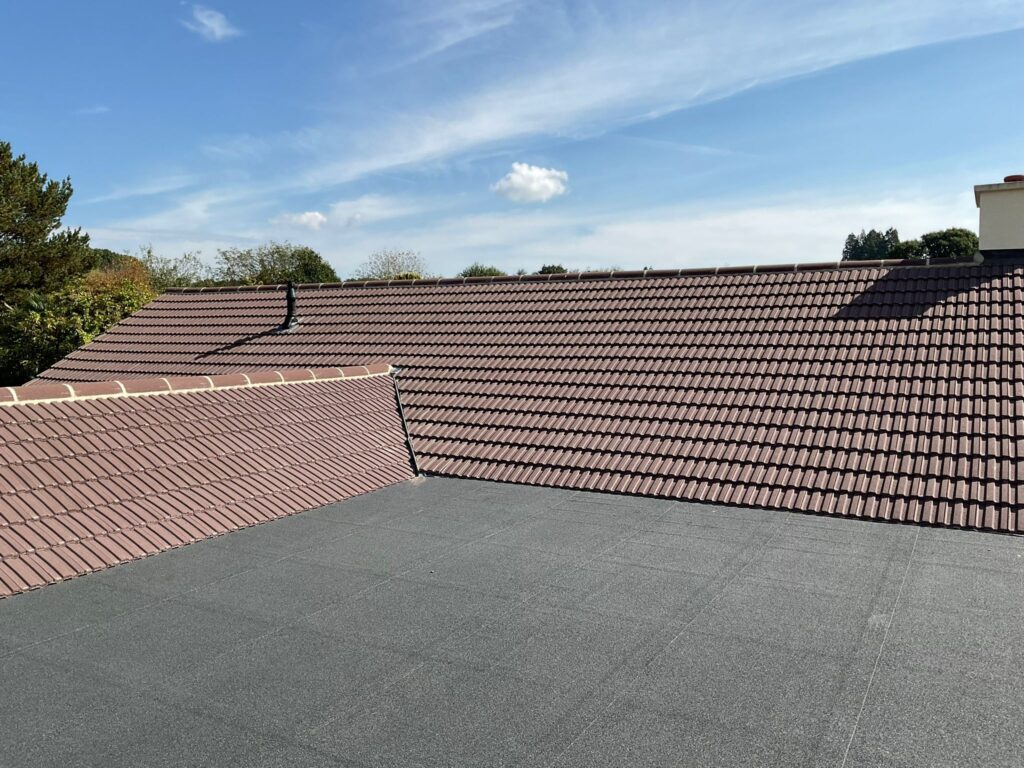
A leaking roof is not always immediately obvious. While some leaks produce visible dripping during rainfall, others allow relatively small amounts of moisture to enter the roof structure without creating an obvious internal warning. Water can travel behind surfaces, follow timbers and gradually affect areas some distance from the original defect. By the time a damp patch becomes noticeable, the roof may have been allowing moisture through for some time.
For property owners in Feltham, Greater London, professional roof leak repairs are important because the aim is not simply to stop the visible symptom. The source of the water entry needs to be identified, the surrounding roofing materials assessed and the affected area repaired appropriately. Dealing with the cause while the problem remains localised can help prevent moisture from continuing to reach previously unaffected parts of the roof.
Why Can a Small Roof Leak Cause Wider Problems if It Is Not Repaired?
A roof is made up of interconnected components that work together to keep water outside the property. Tiles or slates, flashing, valleys, ridges, junctions and the underlying construction all have a role.
When one area develops a defect, water can begin moving through parts of this system that are intended to remain dry. Because the route is often concealed, the amount of visible moisture inside the property does not necessarily indicate the true extent or location of the problem.
Professional leak repair therefore begins by understanding where water is entering and how far it may have travelled.
Roof Leaks Do Not Always Drip Straight Down
One of the most important things to understand about roof leaks is that water does not necessarily appear directly below the external defect.
After entering the roof, moisture can travel along surfaces before gravity eventually brings it into the room below.
A damp ceiling patch may therefore be several feet away from the actual point of entry.
This is why repairing the roof directly above an internal stain without further investigation can miss the real cause.
A Small Ceiling Mark Can Have a Different Source Above
The size of an internal stain should not automatically be used to judge the size of the roofing defect.
A relatively small opening can admit water repeatedly during periods of rainfall.
The moisture may then spread gradually before becoming visible internally.
Professional assessment considers the route water could have taken rather than assuming that the visible mark tells the complete story.
Hidden Water Entry Can Begin Before a Leak Becomes Visible
There can be a delay between water entering the roof and the first obvious internal symptom.
Small quantities of moisture may initially remain within concealed parts of the roof.
Only when enough water reaches a visible surface does the property owner become aware of the problem.
This makes early external warning signs particularly valuable.
Dampness Can Spread Beyond the Original Entry Point
Once water passes through the external covering, it can reach neighbouring areas.
This means a defect affecting a relatively small part of the roof can potentially influence a larger internal section if it remains unresolved.
Prompt repair helps interrupt this process by addressing the route through which water is entering.
Repeated Rainfall Can Make a Minor Defect More Noticeable
A small defect may not cause visible symptoms during every shower.
Prolonged rainfall can expose it more clearly because water has more time to find a route through the affected area.
A ceiling may therefore remain dry during brief rain but develop staining after longer wet periods.
This pattern is useful information when investigating the leak.
Wind-Driven Rain Can Find Vulnerable Roof Details
Strong winds can change the direction from which rain reaches the roof.
Water may be driven towards junctions, flashing or displaced roofing materials in ways that do not occur during calmer weather.
A leak appearing only during windy rain should not automatically be dismissed because it is intermittent.
The underlying weakness remains and may continue allowing moisture through whenever similar conditions return.
A Leak That Stops in Dry Weather Has Not Necessarily Gone Away
Once rainfall ends, an active drip may stop completely.
This can create the impression that the roofing problem has resolved itself.
In reality, the external defect may remain unchanged.
Without repair, the same route can allow water to enter again during future rainfall.
Missing Tiles Can Expose Vulnerable Areas
A missing roof tile creates an obvious interruption in the external covering.
Although underlying materials may initially limit water entry, they are not intended to replace the complete outer roof covering indefinitely.
The surrounding tiles should also be checked because movement affecting one tile may have disturbed neighbouring materials.
Timely repair can restore the affected section before further exposure occurs.
Slipped Tiles Can Create Less Obvious Leaks
A tile does not need to fall completely from the roof before water can find a route through.
Even partial movement can disrupt the normal overlap between roofing materials.
From ground level, the change may appear minor.
Closer assessment can establish whether the tile has moved enough to affect the performance of the covering.
Cracked Roofing Materials Can Allow Gradual Water Entry
Cracks in tiles or slates may be difficult to identify from below.
The roofing material can remain in position while its ability to shed water has been reduced.
Continued weather exposure may gradually enlarge the affected area.
Replacing damaged materials where appropriate can help prevent water from repeatedly reaching the layers beneath.
Broken Corners Should Be Considered in Context
A small broken section does not always produce an immediate leak.
Its significance depends on where the break has occurred and whether the normal overlap remains effective.
Professional assessment avoids treating every minor imperfection as a major problem while still identifying damage that genuinely affects the roof.
The objective is proportionate repair based on actual condition.
Flashing Can Be a Source of Hidden Water Entry
Flashing protects vulnerable roof junctions.
When it becomes displaced or deteriorated, water may begin entering around an area where different materials meet.
Because these junctions can be complex, the internal symptom may appear some distance from the external defect.
Repairing the flashing correctly can stop the entry route rather than repeatedly treating the dampness below.
Roof Junctions Need Careful Investigation
Areas where roof sections meet other parts of the structure deserve particular attention during leak detection.
Small defects at these points can allow concentrated water entry.
A surface-level patch may not be sufficient if the actual weakness lies within the surrounding detail.
Professional inspection helps establish which component is responsible.
Valleys Can Carry Significant Amounts of Water
Roof valleys direct rainfall from adjoining slopes.
Their position means they can carry more water than many individual areas of the roof covering.
A defect within a valley or its surrounding materials can therefore produce substantial moisture entry.
Repairing the affected detail promptly can help prevent water from continuing to reach the roof structure.
Valley Leaks Can Be Difficult to Trace Internally
Water entering around a valley may travel before becoming visible.
The internal stain may therefore provide only an approximate indication of the external source.
The valley itself and neighbouring roofing materials should be assessed together.
This helps avoid repairing one component while leaving another contributing defect unresolved.
Ridge Areas Can Develop Localised Defects
Ridge components are highly exposed to weather.
Movement or deterioration can create vulnerable points within the upper part of the roof.
These defects do not always produce an immediate internal leak.
Checking the ridge and surrounding materials can help identify problems before repeated water entry allows them to become more established.
Roof Edges Can Be Vulnerable to Weather Exposure
The perimeter of a roof can experience significant wind pressure.
If tiles or other materials begin moving around these areas, water may gain access beneath the covering.
A localised edge problem can often be repaired without disturbing the complete roof where the surrounding materials remain sound.
Early identification helps keep the work focused.
Previous Repairs Should Be Checked in Context
A property that develops another leak near an older repair does not automatically have a failure of the previous work.
Neighbouring roofing materials may have deteriorated independently.
The new leak should therefore be assessed according to its own source.
Assuming that an old repair is responsible can lead attention away from the actual defect.
Repeated Leaks in the Same Area Need Further Investigation
If a damp patch continually returns after rainfall, there is likely to be an unresolved water-entry route.
Repeated internal drying or decoration will not correct the roofing problem.
The external area needs to be examined more closely.
A recurring leak can sometimes indicate that the source is different from where it was initially assumed to be.
Several Leaks Can Indicate More Than One Defect
Multiple damp areas do not necessarily originate from one point.
Water can travel, but a roof can also contain several separate weaknesses.
Where leaks are appearing in different locations, a broader assessment may be required.
This helps distinguish one travelling leak from multiple localised defects.
Roof-Space Staining Can Reveal Earlier Water Entry
Where the roof space can be observed safely, staining can sometimes provide useful clues about previous moisture.
Marks on timbers or other surfaces may indicate that water has travelled through the area before reaching the ceiling.
The pattern can help guide professional investigation.
It should still be considered alongside the external roof because internal evidence alone does not always identify the exact source.
Fresh Dampness in the Roof Space Deserves Attention
Recent moisture provides stronger evidence that water is actively entering.
Even if no ceiling stain has developed, fresh dampness can indicate a current roofing defect.
Identifying the problem at this stage may allow repairs to be completed before the moisture becomes visible within occupied rooms.
Hidden Moisture Can Affect More Than the Ceiling Finish
A visible ceiling stain is often the part that attracts attention.
However, water reaches that surface only after passing through or around other parts of the roof construction.
The important objective is therefore to stop further moisture entry at the roof itself.
Simply dealing with the appearance of the internal mark leaves the source unresolved.
Continued Moisture Can Affect Roof Timbers
Roof timbers are intended to remain appropriately protected from persistent water entry.
Where a leak continues for an extended period, repeated dampness can affect the surrounding timber.
The significance depends on the duration and extent of exposure.
Stopping the source early reduces the opportunity for moisture to continue spreading through these areas.
Underlying Roofing Components Can Also Be Affected
The visible roof covering is only the outermost part of the system.
Once water passes through it, underlying components can become exposed to conditions they were not intended to experience repeatedly.
A professional roof repair restores the external protection while allowing the condition of the affected area to be considered.
This is more useful than focusing only on the internal symptom.
Hidden Damage Can Become More Difficult to Understand Over Time
When a leak first begins, its source may be relatively localised.
If water is allowed to continue entering, staining and dampness can spread into additional areas.
This can make the original route more difficult to distinguish from the secondary effects.
Earlier investigation can therefore provide a clearer picture of what actually needs repairing.
A Small Defect Can Affect Neighbouring Materials
Roofing components work together through overlaps, junctions and connected details.
If one material moves or deteriorates, neighbouring areas can become more exposed.
For example, one displaced tile can influence the way water reaches the tiles below or beside it.
Repairing the initial defect can help protect otherwise serviceable surrounding materials.
Prompt Repair Can Keep a Problem Localised
One of the main benefits of addressing a leak early is the possibility of keeping the repair focused.
Where the defect affects only a limited section and the surrounding roof remains sound, targeted work may be sufficient.
Allowing continued exposure can make neighbouring materials part of the problem.
Professional repairs aim to intervene before that progression occurs where possible.
Localised Leaks Do Not Automatically Mean the Whole Roof Is Failing
Discovering water inside a property can understandably create concern about the complete roof.
However, many leaks originate from individual damaged materials or specific details.
If the remainder of the roof is performing correctly, localised repair may be the appropriate solution.
A leak should therefore be diagnosed before conclusions are drawn about the overall roof.
Widespread Deterioration Requires a Different Approach
Some roofs contain several connected defects rather than one isolated weakness.
Repeated leaks, widespread tile movement and deterioration across multiple details can indicate a broader issue.
In these circumstances, repeatedly repairing only the latest visible symptom may become less effective.
Professional assessment helps determine whether the problem remains localised or requires wider attention.
Professional Leak Detection Helps Avoid Guesswork
Roof leaks are often more complicated than they appear from inside.
The damp patch identifies where water eventually became visible, not necessarily where it entered.
Professional assessment considers external defects, internal evidence and the likely path of moisture.
This creates a stronger basis for repair than simply treating whichever roof area is directly above the stain.
Repairing the Entry Point Stops the Cause
The central purpose of professional roof leak repair is straightforward: prevent water from continuing to enter through the defect.
This may involve replacing damaged roofing materials, correcting displacement or repairing a vulnerable detail.
The precise work depends on what the investigation identifies.
Stopping the actual entry route helps prevent additional moisture from spreading into concealed areas.
Drying an Internal Area Does Not Repair the Roof
A damp ceiling can dry once the weather improves.
That does not establish that the external defect has disappeared.
If the roof remains unrepaired, the same area can become wet again during future rainfall.
Internal improvement should therefore not be confused with resolution of the roofing problem.
Covering a Ceiling Stain Only Hides the Symptom
Redecoration may make an old stain less visible, but it cannot prevent further water entry.
If the source remains active, the mark can return.
The correct order is to understand and repair the roofing defect before treating the internal appearance as a finished issue.
This prevents cosmetic work from disguising an unresolved problem.
Temporary Measures Are Not Always a Lasting Repair
In some circumstances, temporary measures may be useful for limiting immediate water entry.
They should not automatically be regarded as the final solution.
Once conditions allow, the actual defect should be properly assessed and repaired.
A temporary measure is most useful when it forms part of a clear route towards a lasting repair.
Repeated Temporary Repairs Can Hide a Developing Pattern
If the same roof area repeatedly receives short-term attention, the underlying problem deserves closer investigation.
There may be a detail that has not been correctly identified or surrounding materials may also be deteriorating.
Continuing to treat the symptom can make the repair history increasingly complicated.
A broader assessment can help establish why the leak keeps returning.
Early Roof Repairs Can Protect Sound Surrounding Areas
A roof may contain one defective component while most of the surrounding materials remain serviceable.
Repairing the affected section can help preserve those sound areas.
This is an important reason not to wait until a minor leak becomes widespread.
Targeted intervention can often be more appropriate when deterioration is still clearly defined.
Leaks Can Become More Noticeable After Successive Wet Periods
A property owner may initially notice only occasional staining.
After several periods of rainfall, the mark may become larger or take longer to dry.
This change can indicate repeated moisture entry.
The pattern is useful evidence that the problem is active and should be investigated rather than treated as an isolated event.
A Leak Can Change Its Internal Appearance
Water does not always follow exactly the same route each time.
Changes in rainfall intensity or wind direction can affect where moisture travels.
A leak may therefore appear to move or produce different staining patterns.
This is another reason diagnosis should focus on the roof rather than assuming each new internal mark represents a completely separate problem.
Intermittent Leaks Still Matter
A leak that occurs only occasionally is still a roofing defect if water is entering where it should not.
The fact that the ceiling remains dry most of the time does not remove the underlying weakness.
Intermittent symptoms can actually make diagnosis more important because the particular weather conditions that trigger the leak can provide clues about its source.
Warning Signs of a Hidden Roof Leak
Professional roof assessment may be worthwhile where you notice:
- damp or discoloured patches on ceilings;
- staining that becomes darker after rainfall;
- an intermittent drip during prolonged wet weather;
- moisture appearing only during wind-driven rain;
- fresh dampness within the roof space;
- staining on accessible roof timbers;
- recurring marks after previous internal decoration;
- several damp areas appearing close together;
- missing, slipped or cracked roofing materials;
- deterioration around valleys, ridges or flashing;
- a leak returning repeatedly in the same part of the property;
- internal moisture without an obvious external defect from ground level.
These signs do not automatically indicate extensive roof damage. They provide reasons to identify whether water is entering and where the defect is located.
Not Every Ceiling Mark Is an Active Roof Leak
Older water staining can remain visible after the original source has been repaired.
Condensation and other forms of moisture can also produce internal marks.
Professional assessment helps establish whether the roof is currently allowing water through.
This avoids unnecessary roofing work where the external covering is not responsible.
Moss Alone Does Not Prove a Roof Is Leaking
A moss-covered roof may look heavily weathered, but appearance alone cannot confirm water entry.
The actual condition of the roofing materials and details is more important.
A roof with moss may remain weather-resistant, while a visually clean roof can still contain a localised defect.
Leak diagnosis should be based on evidence rather than appearance.
Roof Age Alone Does Not Identify the Source
Older roofs can develop leaks, but age by itself does not explain where water is entering.
Likewise, a relatively newer roof can develop a localised problem.
The repair should respond to the condition of the specific materials and details involved.
This prevents assumptions about age from replacing proper diagnosis.
One Leak Does Not Automatically Mean Roof Replacement
A localised leak can often originate from a repairable defect.
Replacement of the complete roof should not be assumed simply because water has entered.
The extent of deterioration across the roof is what matters.
Where the surrounding covering remains sound, targeted professional repairs can often address the actual problem without unnecessary wider work.
Several Recurring Leaks Deserve a Wider Assessment
The situation changes where leaks continue appearing in different places.
This can suggest that multiple parts of the roof are deteriorating.
A wider assessment can establish whether individual repairs remain appropriate or whether the problems are connected.
The recommendation should be based on the overall condition rather than the number of stains alone.
Professional Assessment Helps Determine the Correct Extent of Repair
Effective roof repair is not about carrying out the greatest possible amount of work.
It is about addressing what genuinely needs attention.
Where damage is confined to one area, the repair can remain focused.
Where investigation reveals connected deterioration, the work can be expanded accordingly.
This condition-led approach helps avoid both inadequate repairs and unnecessary disruption to sound roofing materials.
Why Timely Roof Leak Repairs Matter
The longer water continues entering a roof, the greater the opportunity it has to reach additional areas.
A minor external defect can therefore become more complicated if repeated rainfall continues exploiting the same weakness.
Timely professional repair interrupts that process.
The aim is to stop water at its entry point while the surrounding roof remains as unaffected as possible.
Why Professional Roof Leak Repairs Matter
Finding a roof leak requires more than identifying where water appears indoors.
Roofing materials, junctions, valleys, flashing and weather patterns all need to be considered when tracing the source.
Professional roof leak repairs combine investigation with proportionate remedial work.
By identifying the actual defect and assessing surrounding materials, the repair can address the cause rather than simply hiding the evidence of water entry.
Professional Roof Leak Repairs in Feltham, Greater London
At LS Roofing Feltham, we understand that the most obvious sign of a roof leak does not always reveal where the problem begins. A small ceiling stain can originate from displaced roofing materials, damaged flashing or another vulnerable detail some distance away.
Our approach is to assess the affected area, identify the likely route of water entry and determine the extent of repair required. Where the defect is localised and the surrounding roof remains sound, targeted repair may be sufficient. Where several connected areas are deteriorating, a wider assessment can establish the appropriate response.
For properties in Feltham, Greater London, addressing roof leaks promptly can help prevent repeated moisture entry from spreading beyond the original affected area.
Conclusion
Professional roof leak repairs can help stop hidden damage from spreading by identifying and repairing the actual route through which water is entering. This is important because moisture does not necessarily appear directly below a roofing defect. It can travel along concealed surfaces, reach neighbouring areas and remain unnoticed until staining or dripping eventually becomes visible.
Missing or slipped tiles, cracked roofing materials, damaged flashing, vulnerable valleys and deteriorating roof junctions can all create localised routes for water entry. When these defects are repaired while the surrounding roof remains sound, the problem can often be contained before repeated rainfall allows moisture to affect a wider area.
Not every damp mark means extensive roofing work is necessary, and one leak does not automatically mean that the complete roof needs replacing. The appropriate response depends on finding the source and understanding the condition of the surrounding materials.
If you have noticed a leak, recurring ceiling stain or other signs of water entry at your property in Feltham, Greater London, contact LS Roofing Feltham. We can assess the affected roof area, trace the likely source and recommend appropriate roof leak repairs based on the actual condition of your roof.
Call us on: 020 4572 0290
Click here to find out more about LS Roofing Feltham
Click here to complete our contact form and see how we can help with your roofing needs.